




Due to rain, snow, and early sunsets, the season at outdoor facilities lasts only a few months, meaning a significant portion of their potential is simply wasted. Moving the skatepark indoors and ensuring proper lighting completely solves this problem—making skating in the middle of winter just as comfortable as on a summer afternoon.
Benefits for the investor:
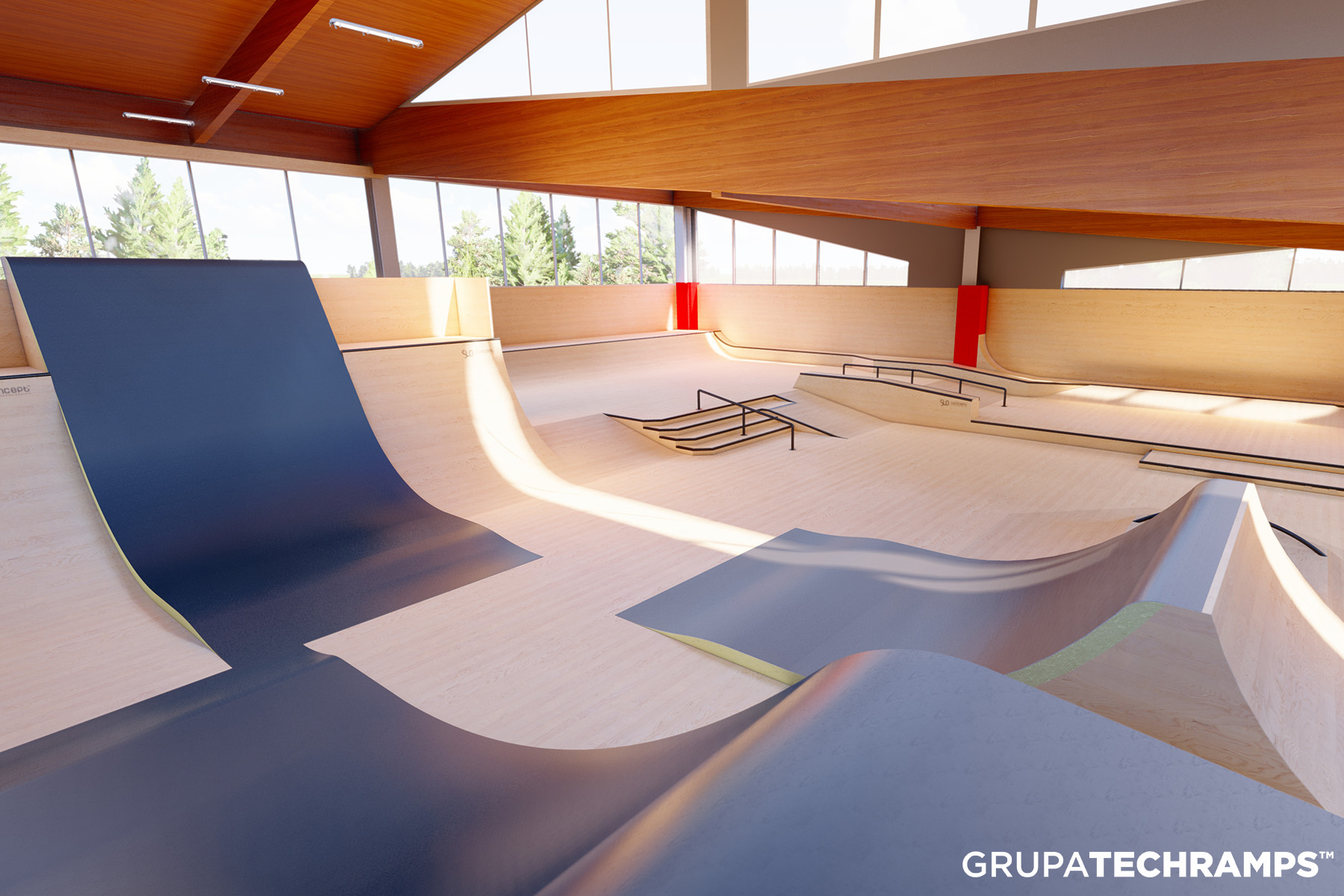
Finding a suitable plot of land for a sports facility in a densely built-up urban area can be difficult, and the main barrier is often the concerns of nearby residents about the noise generated by skateboards hitting the surface. In this case, the enclosed structure of the building acts as a natural acoustic barrier. Proper adaptation of the hall into a sports facility and careful planning of the interior space allow for effective soundproofing.
Benefit for the investor: An indoor facility offers the opportunity to create a vibrant sports center near residential neighborhoods or even right in the heart of the city, without the risk of conflicts with the local community or violating noise regulations.
Any outdoor infrastructure must withstand the forces of nature. Freeze-thaw cycles, heavy rainfall, and UV radiation naturally wear down materials, which over time leads to repair costs. A roof eliminates this damaging effect of the weather on the surface (both concrete and wood) and steel components, such as pipes and coping.
Benefit for the investor: A drastic reduction in ongoing maintenance costs. An indoor skatepark maintains its ideal technical condition and precise riding parameters for many years. The lack of need for frequent renovations after winter seasons effectively protects the investor’s long-term budget.
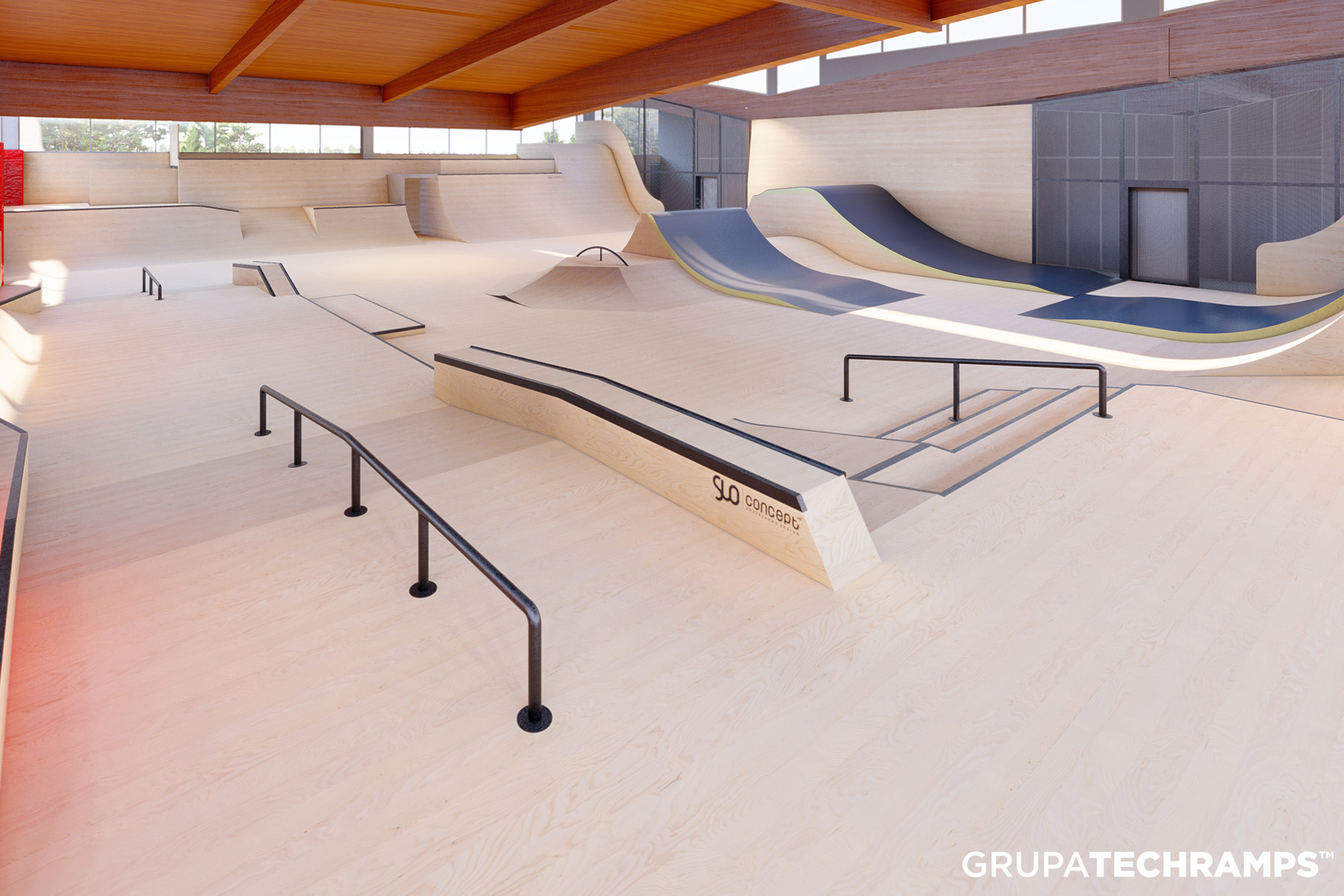
Organizing large competitions, workshops, or regular activities for young people in an open-air setting always carries risks. A sudden change in weather can derail plans for organizers and participants at any moment. A covered space, however, is synonymous with predictability, as conditions inside the facility are always optimal and fully controlled by the facility operator.
Benefit for the investor: An indoor facility naturally evolves into an educational and event center. It provides the opportunity to organize sports academies, winter camps, and competitions. The investor can plan the event calendar several months in advance, which makes it easier to attract sponsors and business partners.
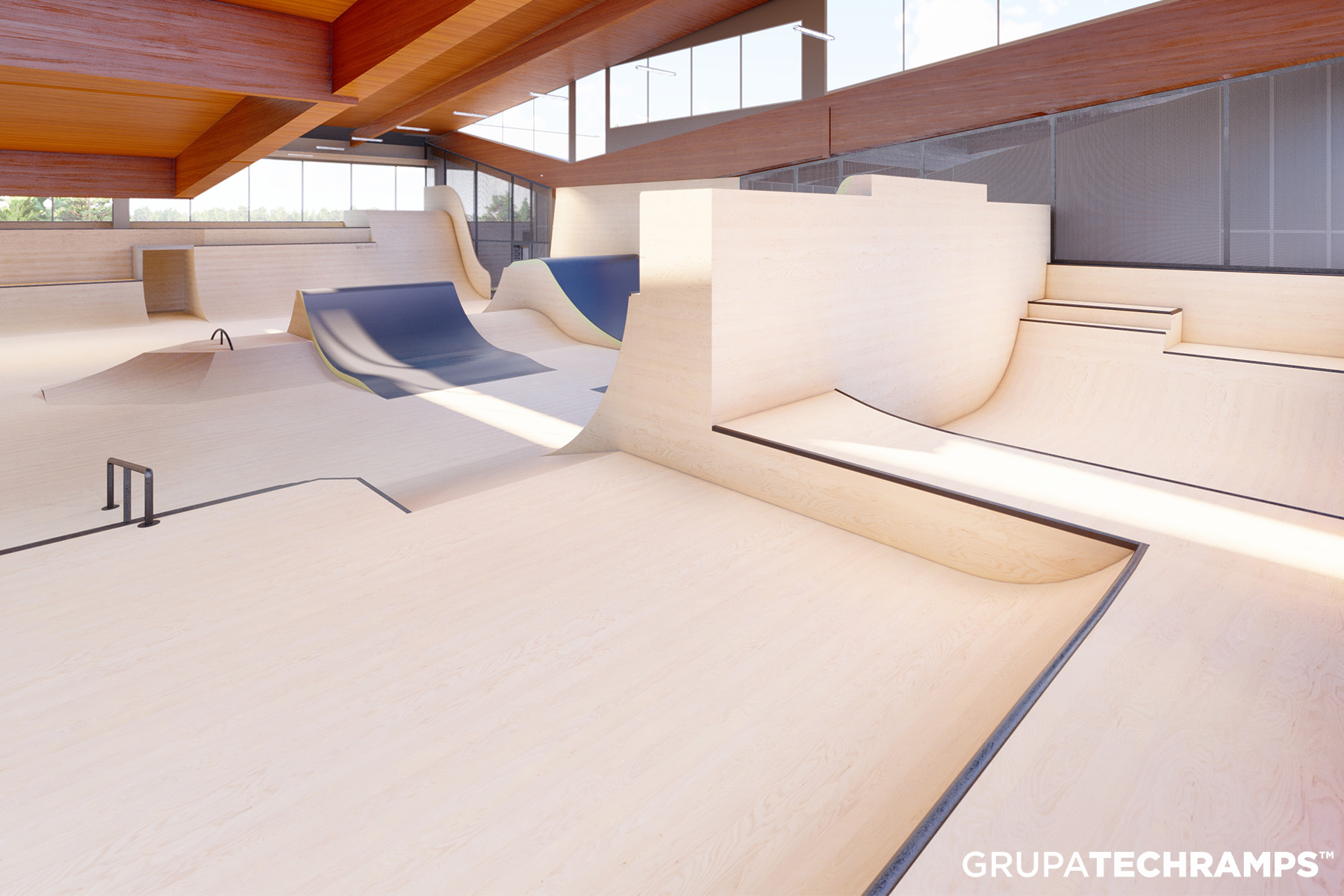
Indoor skateparks are the perfect solution to the specific needs of cities and private investors. They’re an ideal way to revitalize post-industrial spaces and create modern, year-round gathering places.
Prefer a shorter version? Check out our latest summary on our Instagram profile, where we’ve compiled the most important information in an easy-to-read graphic: https://www.instagram.com/p/DaNQHjpgu_s/?img_index=1
Do you have an empty hall or are you planning a sports facility in your city?
Let’s see what can be done with it. Designing indoor facilities is a complex architectural process—from space analysis, through zoning, to the final design. At Slo Concept, we serve markets in Poland and across Europe (including the Czech Republic and Austria). Contact our team, and we’ll help you assess your facility’s potential and prepare a professional concept.
Send us a message at: info@slococnept.pl— let’s talk about the possibilities for your space!
What types of buildings are suitable for conversion into an indoor skatepark?
Disused industrial halls, former warehouses, or old sports facilities work best. The key factors are sufficient ceiling height and the absence of a dense grid of support columns that could disrupt the flow of skating.
Is it expensive to maintain an indoor skatepark?
Although the cost of converting and operating the facility differs from that of open-air skateparks, the roof completely eliminates the impact of adverse weather conditions. As a result, the long-term costs of repairing the surface and obstacles (OPEX) are drastically lower.
Who designs indoor skateparks?
This process requires a specific combination of architectural design and urban sports engineering. Slo Concept comprehensively handles such projects, from space audits to final project supervision.

2026-08-20 08:41

2026-06-18 13:11

2026-05-18 14:11

2026-04-14 13:41

2026-03-26 10:10